
20 Enterprise-Ready Platforms That Give You a Single-Pane Business View
Running a large organization means juggling countless data sources, departments, and workflows. When information lives in separate silos, decision-makers waste time hunting for insights and teams struggle to collaborate effectively. Enterprise-scale platforms that consolidate your business view into one interface can transform how your organization operates. This list focuses on solutions built for large teams that need robust security, compliance features, and the ability to scale across global operations. Whether you manage hundreds of employees or coordinate multiple business units, these platforms can help you see everything that matters in one place.
- Legiit
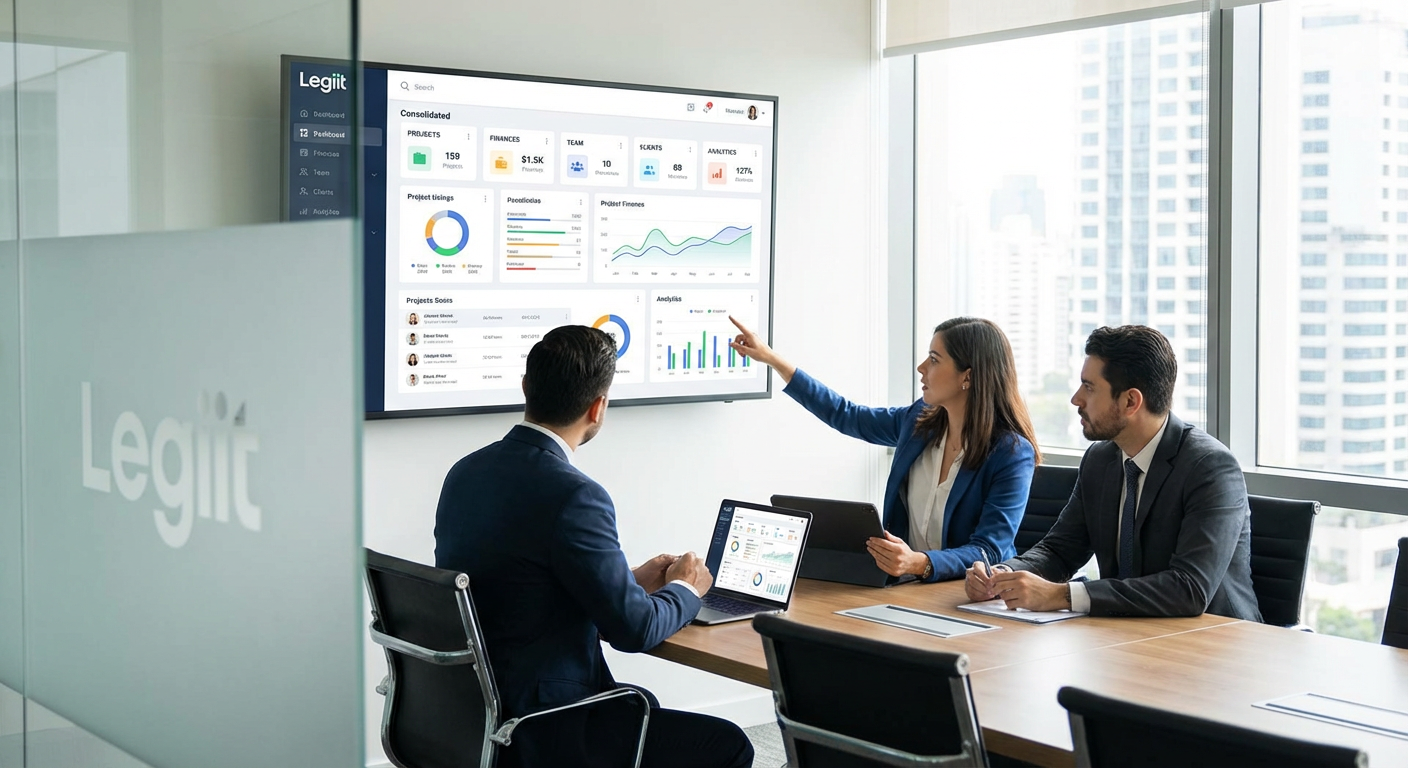
Legiit offers a centralized marketplace and project management system that helps large organizations manage their freelance workforce and external vendor relationships from one dashboard. For enterprise teams that rely on specialized contractors for marketing, development, or content creation, Legiit provides visibility into all external projects, budgets, and deliverables without switching between multiple vendor portals. The platform includes tools for tracking spending across departments, managing approvals, and maintaining quality control when you scale your use of outside talent. This makes it particularly valuable for companies that want to maintain agility while keeping oversight of their extended workforce.
- SAP Analytics Cloud

SAP Analytics Cloud brings together business intelligence, planning, and predictive analytics in one environment designed for large enterprises. It connects directly to SAP systems that many corporations already use, pulling data from ERP, supply chain, and financial platforms into unified dashboards. Security and governance features meet the strict requirements that regulated industries face, with granular access controls and audit trails. For organizations already invested in the SAP ecosystem, this platform reduces the complexity of managing separate analytics tools while maintaining the control that enterprise IT departments require.
- Microsoft Power BI Premium
Power BI Premium extends Microsoft’s business intelligence platform with enterprise-grade features like dedicated cloud capacity, advanced AI capabilities, and deployment pipelines. Large organizations benefit from the ability to share reports across thousands of users without per-user licensing costs, which makes company-wide rollouts financially practical. The platform integrates naturally with Azure, Office 365, and Dynamics, creating a cohesive view when your organization runs on Microsoft infrastructure. Premium also includes features like automated machine learning and paginated reports that support complex regulatory reporting requirements.
- Oracle Fusion Cloud
Oracle Fusion Cloud combines ERP, HCM, supply chain, and customer experience applications in a unified cloud environment with a consistent interface across modules. For multinational corporations, this platform handles complex requirements like multiple currencies, tax jurisdictions, and legal entities while keeping all data accessible from central dashboards. The platform’s strength lies in its depth, offering industry-specific functionality for sectors like manufacturing, financial services, and healthcare. Organizations that need tight integration between finance, operations, and HR often find this comprehensive approach reduces the data fragmentation that plagues multi-system environments.
- Salesforce Customer 360
Salesforce Customer 360 connects multiple Salesforce clouds, including Sales Cloud, Service Cloud, Marketing Cloud, and Commerce Cloud, into a unified customer view. Enterprise customers benefit from the platform’s ability to track every customer interaction across departments, from initial marketing touch to post-sale support, all visible in one interface. The platform handles massive data volumes and complex organizational structures with territory management, role hierarchies, and sophisticated sharing rules. For companies where customer data flows through multiple departments, this consolidated view helps prevent the silos that lead to poor customer experiences.
- Workday Enterprise Management Cloud
Workday combines financial management and human capital management in a single cloud platform that gives executives visibility into both financial and workforce metrics. The platform’s in-memory architecture allows leaders to drill from high-level dashboards into transaction details without switching systems or waiting for data refreshes. Workday’s security model, with its role-based access and comprehensive audit capabilities, meets the requirements of publicly traded companies and heavily regulated industries. Organizations replacing legacy ERP and HR systems often choose Workday specifically for the unified reporting and planning capabilities that span finance and people operations.
- IBM Cognos Analytics
IBM Cognos Analytics provides enterprise business intelligence with particular strength in governed, report-heavy environments where compliance and consistency matter. The platform supports complex organizational reporting structures, allowing different business units to maintain their own analytics while corporate teams maintain oversight and standards. Cognos handles on-premises, cloud, and hybrid deployments, which matters for organizations with data residency requirements or legacy systems they cannot immediately migrate. Its ability to create pixel-perfect reports makes it a fit for organizations with strict formatting requirements for regulatory filings or board presentations.
- ServiceNow Platform
ServiceNow started as IT service management but has evolved into a broader platform for workflow automation and enterprise service delivery across departments. Large organizations use it to create a single interface for employees to request services, track issues, and manage approvals regardless of which department handles the work. The platform’s strength is connecting different back-end systems while presenting users with consistent experiences. For enterprises trying to reduce the number of interfaces employees must learn, ServiceNow acts as a unifying layer that can span IT, HR, facilities, legal, and other shared services.
- Tableau Enterprise
Tableau Enterprise adds governance, scalability, and administrative controls to Tableau’s visual analytics capabilities. The enterprise version supports thousands of users with centralized management of data connections, permissions, and content. Organizations benefit from features like row-level security that ensures people see only the data they should access, plus integration with enterprise authentication systems. Tableau Server or Tableau Cloud can handle the performance demands of large user bases while maintaining the self-service approach that reduces bottlenecks when business users need to explore data themselves.
- Anaplan
Anaplan provides connected planning across finance, sales, supply chain, and workforce functions, allowing large organizations to model scenarios and see impacts across the business. The platform excels at handling the complexity of planning for large enterprises with multiple business units, product lines, and geographies. Real-time calculation capabilities mean that when one department updates their plan, dependent models across the organization reflect those changes immediately. For companies where planning cycles involve extensive cross-functional coordination, Anaplan provides the shared workspace and calculation engine that keeps everyone working from the same assumptions.
- Infor CloudSuite
Infor CloudSuite offers industry-specific ERP solutions with deep functionality for sectors like manufacturing, distribution, healthcare, and hospitality. The platform provides a unified view across financials, operations, and supply chain while incorporating workflows and metrics specific to each industry. For multi-site enterprises, CloudSuite handles complex manufacturing and distribution scenarios with visibility into operations across locations. The platform’s compliance features address industry regulations, and its multi-tenant cloud architecture delivers the reliability and uptime that large operations require.
- Domo Business Cloud
Domo connects to hundreds of data sources and presents consolidated views through customizable dashboards that update in real time. Enterprise customers use it to give executives, managers, and frontline employees access to the metrics they need without requiring SQL knowledge or business intelligence training. The platform includes collaboration features that let teams discuss data and take action directly within the interface where they view reports. For organizations that want to democratize data access while maintaining security and governance, Domo provides both the technical connectivity and the user experience that encourages adoption.
- NetSuite OneWorld
NetSuite OneWorld extends Oracle NetSuite’s cloud ERP with capabilities for managing multiple subsidiaries, currencies, and tax jurisdictions from a single instance. Growing enterprises benefit from the ability to add new business units or acquired companies without implementing separate systems, keeping all financial and operational data in one consolidated view. The platform handles intercompany transactions, eliminations, and consolidated reporting automatically, reducing the manual work that typically consumes finance teams at month-end. For companies expanding internationally or through acquisition, OneWorld provides the structure to maintain control while allowing subsidiary autonomy.
- Qlik Sense Enterprise
Qlik Sense Enterprise delivers associative analytics that let users explore data connections across the entire business without predefined drill paths. The platform’s engine handles billions of rows while maintaining interactive performance, which matters when enterprise datasets span years of transactions across multiple systems. Governance features include centralized management of data models, security rules, and app distribution. For organizations where business questions require connecting data from disparate sources, Qlik’s approach to data association provides insights that query-based tools might miss.
- Epicor ERP
Epicor ERP targets manufacturing, distribution, and retail enterprises with functionality that connects production, inventory, financials, and customer management. The platform provides visibility from quote to cash, letting users see how sales orders flow through production, shipping, and invoicing without switching systems. Industry-specific features address the complexity of make-to-order manufacturing, lot traceability, and compliance requirements in regulated industries. For mid-sized to large manufacturers, Epicor offers depth in operational areas while maintaining the integrated financial management that executives need for business oversight.
- Sisense for Cloud Data Teams
Sisense provides embedded analytics and business intelligence with architecture designed to handle complex data models and high user concurrency. Enterprise customers use it both for internal analytics and for embedding reports into customer-facing applications, all managed through the same platform. The solution’s ability to combine data from cloud warehouses, databases, and applications into unified models makes it valuable for organizations with modern, distributed data architectures. Performance optimization features ensure that dashboards remain responsive even when hundreds of users access them simultaneously.
- Unit4 ERP
Unit4 ERP focuses on service-oriented organizations like professional services firms, nonprofits, and public sector entities. The platform connects project management, resource planning, financials, and procurement in ways that reflect how service businesses actually operate. For enterprises that bill time and materials or manage grant funding, Unit4 provides the project-centric view that general-purpose ERPs often lack. The platform’s people-centric design recognizes that in service organizations, human resources and project delivery are inseparable, so it presents workforce and financial data together.
- IFS Applications
IFS Applications serves asset-intensive industries like aerospace, defense, manufacturing, and energy with ERP and enterprise asset management in one platform. Organizations that maintain complex equipment benefit from seeing asset performance, maintenance history, and financial impact in connected views. The platform handles project-based manufacturing and service delivery, which matters for companies that build to specification or provide ongoing equipment support. For enterprises where physical assets represent major investments, IFS connects operational and financial perspectives in ways that help optimize asset lifecycle decisions.
- Sage Intacct
Sage Intacct provides cloud financial management with multi-entity and multi-dimensional reporting capabilities designed for organizations with complex structures. The platform excels at consolidations, allowing corporate teams to see across subsidiaries, divisions, or franchises while giving local teams autonomy over their operations. Automated intercompany transactions and eliminations reduce the manual work that typically bogs down distributed finance teams. For growing companies that need sophisticated financial management but want to avoid the complexity and cost of Tier 1 ERP systems, Intacct offers a middle path with strong financial capabilities and reasonable implementation timelines.
- Planview Enterprise One
Planview Enterprise One combines project portfolio management, resource management, and strategic planning in a platform built for large organizations managing hundreds of concurrent initiatives. The solution provides executives with visibility into all projects, investments, and resource allocation across the enterprise, helping answer questions about capacity, prioritization, and delivery. Integration with financial systems connects project spending to budgets and forecasts, creating a complete view of how the organization invests in change. For companies where project delivery drives business results, Planview connects strategy, portfolio, and execution in ways that help leaders make informed trade-offs when resources are constrained.
Large organizations face unique challenges when trying to consolidate business views across complex operations, multiple systems, and global teams. The platforms in this list address those challenges with the security, scalability, and governance features that enterprise environments demand. Choosing the right solution depends on your industry, existing technology investments, and whether you need depth in specific areas like manufacturing, financial services, or project-based work. The good news is that mature enterprise platforms now offer the integration capabilities and user experiences that make consolidated views practical, not just theoretical. Start by identifying which business processes cause the most friction due to scattered information, then evaluate platforms that specifically address those pain points while fitting your broader technology strategy.