
How to Optimize for AI Overviews at Enterprise Scale: 15 Strategies That Actually Work
If you manage content for a large organization, you already know that AI overviews are changing how customers find information. These AI-generated summaries appear at the top of search results, pulling from authoritative sources to answer user questions directly. For enterprise teams, optimizing for AI overviews means adapting your content strategy at scale while maintaining brand consistency, meeting compliance standards, and delivering measurable ROI. This guide offers practical strategies built for organizations that operate across multiple teams, regions, and content systems.
- Leverage Legiit for Scalable Content Production
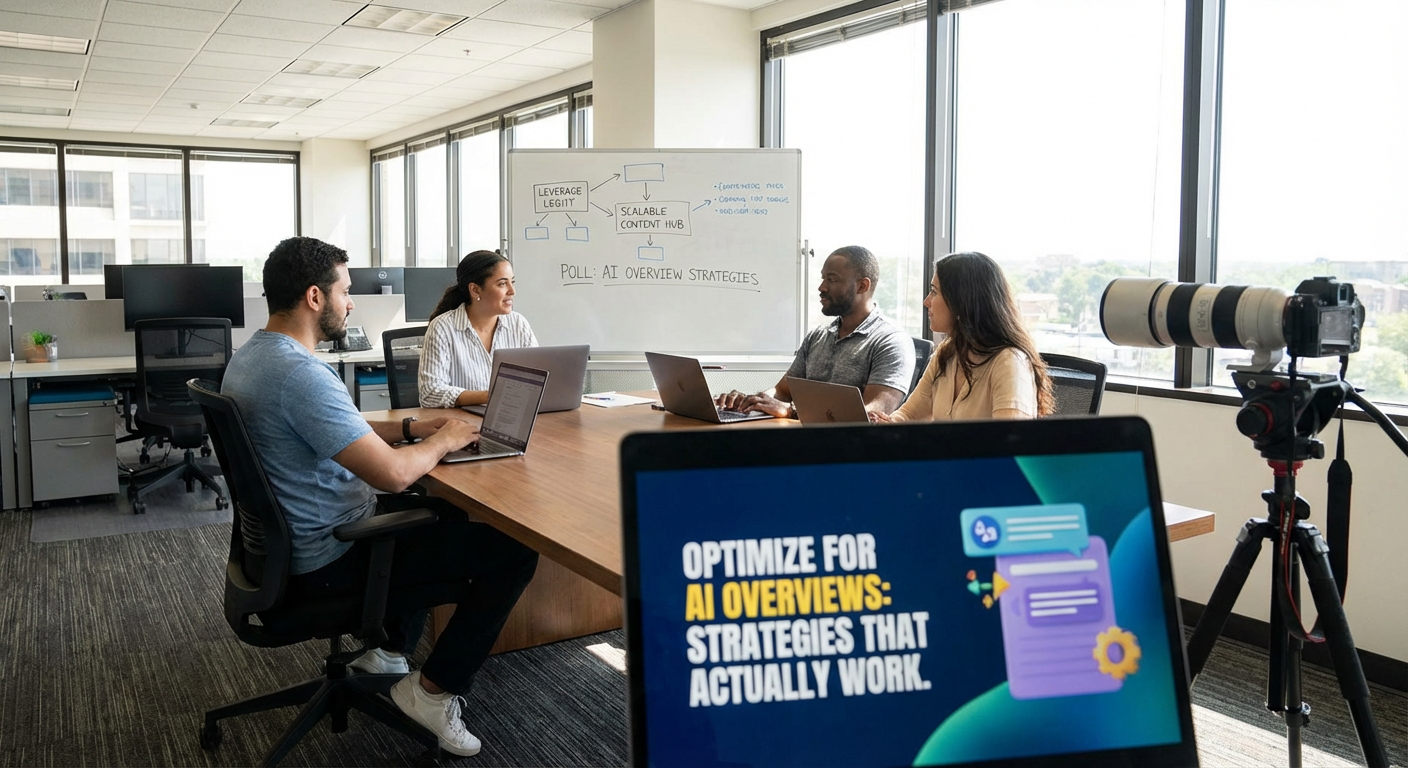
Large organizations need reliable content partners who can deliver quality at volume. Legiit connects enterprise teams with vetted content professionals who understand technical writing, structured data implementation, and SEO best practices. When you need to scale content production across multiple product lines or regional sites, working with specialists through a trusted platform helps maintain quality standards without the overhead of traditional agencies. The platform’s project management tools and transparent pricing make it easier to manage multiple content workstreams simultaneously, which is critical when optimizing hundreds or thousands of pages for AI visibility.
- Implement Schema Markup Across All Properties

Structured data tells search engines exactly what your content means, which directly feeds AI overview systems. For enterprise sites, this means deploying schema markup consistently across product pages, support documentation, and knowledge bases. Common schema types like FAQ, How-To, and Article schemas give AI systems clear signals about your content structure.
Work with your development team to create templates that automatically generate appropriate schema for different content types. Regular audits ensure that schema remains accurate as content updates occur. This level of technical implementation requires coordination between content, development, and SEO teams, but the payoff is significant when AI systems reliably pull from your content.
- Establish Content Governance for Question-Focused Pages
AI overviews prioritize content that directly answers specific questions. For enterprises, this means creating a governance model that ensures consistent question-and-answer formatting across all departments. Define standards for how product teams, support teams, and marketing teams structure answers to common customer questions.
Create templates that enforce clarity and conciseness. Set word count guidelines that balance completeness with readability. Most importantly, establish review processes that verify accuracy before publication, since errors in AI overviews can damage brand reputation at scale. Centralized governance prevents conflicting information from appearing across different parts of your digital ecosystem.
- Build a Centralized Knowledge Graph
Large organizations often struggle with information silos. A centralized knowledge graph connects related concepts, products, and topics across your entire content library. This structure helps AI systems understand relationships within your domain expertise.
Invest in knowledge management platforms that can map entity relationships and surface related content automatically. When AI systems scan your content, they can follow these connections to understand context more deeply. This approach is particularly valuable for organizations with complex product portfolios or technical documentation that spans multiple disciplines. The initial investment in building this infrastructure pays dividends as your content library grows.
- Prioritize E-E-A-T Signals at the Organizational Level
Experience, expertise, authoritativeness, and trustworthiness matter more than ever for AI overview inclusion. For enterprises, this means systematically demonstrating these qualities across all content. Add detailed author bios with credentials and relevant experience. Link to peer-reviewed sources and industry publications. Display security certifications and compliance badges prominently.
Create an internal credentialing system that verifies which team members are qualified to publish on specific topics. When AI systems evaluate your content, they look for these trust signals. Organizations that invest in building and displaying authority consistently outperform competitors in AI overview visibility.
- Deploy Content at Scale with Regional Optimization
Global enterprises need strategies that work across different languages and regions. AI overviews appear in multiple markets, and optimization requires understanding local search behavior and language nuances. This goes beyond simple translation. Regional teams should adapt content to address local questions, use region-specific examples, and cite locally relevant sources.
Build workflows that allow regional teams to customize content while maintaining core brand messages. Use content management systems that support multi-regional publishing with appropriate hreflang tags. Monitor AI overview performance by region to identify where localization efforts are paying off and where additional refinement is needed.
- Create Modular Content Systems for Rapid Updates
When product information changes or new regulations emerge, enterprise content needs updating quickly. Modular content systems let you update a single source that automatically propagates changes across all affected pages. This prevents outdated information from appearing in AI overviews, which can happen when content lives in multiple disconnected locations.
Structure your content management system with reusable components for specifications, features, and common explanations. When AI systems scan your site, they find consistent, current information regardless of entry point. This approach also reduces the maintenance burden on content teams, who can focus on creating new material rather than hunting down outdated references.
- Monitor Competitor AI Overview Presence
Enterprise SEO teams need visibility into which competitors appear in AI overviews for strategic keywords. Build monitoring systems that track AI overview presence across your priority query set. Document which sources AI systems favor and analyze what makes that content effective.
This competitive intelligence should inform content strategy meetings and help prioritize optimization efforts. If competitors consistently appear for product comparison queries, that signals an opportunity to strengthen your own comparison content. Regular reporting on AI overview presence should become part of standard performance dashboards alongside traditional organic rankings.
- Align Legal and Compliance Teams Early
Content that appears in AI overviews represents your organization in a highly visible way. Before launching large-scale optimization efforts, bring legal and compliance teams into the planning process. They need to review content standards, disclosure requirements, and risk management protocols.
Develop approval workflows for sensitive topics like financial advice, health information, or regulated products. Create clear guidelines about what claims can and cannot be made in question-answer formats. When compliance is built into the content creation process rather than added as a late-stage gate, you can move faster while maintaining appropriate controls.
- Optimize for Voice and Conversational Queries
AI overviews often respond to conversational, voice-style queries that differ from traditional keyword searches. Enterprise content strategies should account for these longer, more natural question formats. Analyze your search console data for question-based queries and create content that specifically addresses these patterns.
Write in a more conversational tone for FAQ and support content. Test your content by reading it aloud to ensure it sounds natural when spoken. As voice assistants increasingly pull from AI overviews, optimizing for conversational language positions your content for multiple discovery channels. This requires a subtle shift in writing style that may need training and examples for content teams.
- Measure Performance with Custom Analytics
Standard analytics tools do not always capture AI overview performance clearly. Enterprise organizations should work with analytics teams to create custom tracking for AI-related traffic. Set up separate segments for users who may have discovered your content through AI overviews based on landing page behavior and referral patterns.
Track which pages appear most frequently in AI overviews and correlate that with business outcomes like lead generation or support ticket reduction. Build dashboards that show AI overview performance alongside traditional SEO metrics. This data helps justify continued investment in optimization efforts and guides resource allocation across content teams.
- Invest in Content Quality at Every Level
AI systems reward content that genuinely helps users. For enterprises, this means raising quality standards across all content types, not just flagship marketing pages. Support documentation, product specifications, and technical guides all qualify for AI overview inclusion when they provide clear, accurate answers.
Establish quality benchmarks that define what good content looks like in your organization. Train writers across departments on these standards. Implement peer review processes that catch errors before publication. While this requires more time per piece of content, the result is a library that AI systems trust and reference consistently. Quality cannot be an afterthought when competing for AI overview visibility.
- Build Internal Linking Architecture That Supports Context
How you link content together helps AI systems understand topical relationships and domain expertise. For large sites, this means developing a strategic internal linking plan that guides both users and AI systems through related information. Link from general overview pages to detailed technical content. Connect product pages to relevant case studies and documentation.
Audit your existing internal links to identify orphaned content that lacks sufficient connections. Use descriptive anchor text that clarifies the relationship between pages. When AI systems crawl your site, strong internal linking helps them map your expertise and understand which content provides the most authoritative answers. This architectural work often gets overlooked but provides substantial benefits.
- Coordinate Cross-Functional Teams Around Shared Goals
Optimizing for AI overviews at enterprise scale requires coordination between SEO, content, development, product, and legal teams. Create a working group with representatives from each function to align on strategy and remove blockers. Regular meetings ensure that technical implementations happen on schedule and content priorities reflect business objectives.
Define clear ownership for different aspects of the optimization process. SEO teams might own keyword research and performance tracking. Content teams handle writing and updates. Development teams implement technical requirements. When everyone understands their role and how it connects to the larger goal, execution becomes smoother and faster. Cross-functional alignment is often the difference between successful enterprise initiatives and efforts that stall.
- Plan for Long-Term Content Maintenance
AI overview optimization is not a one-time project. Content needs regular updates to maintain accuracy and relevance. For enterprises, this means building sustainable maintenance processes into content operations. Assign ownership for different content areas. Set review schedules based on how quickly information becomes outdated.
Create systems that flag content for review when related products change or new regulations take effect. Budget for ongoing content work rather than treating it as a temporary initiative. Organizations that commit to continuous improvement maintain their AI overview presence over time, while those that treat it as a campaign see their visibility decline as content ages. Sustainable operations require planning, resources, and executive support for the long term.
Optimizing for AI overviews at enterprise scale requires more than just better writing. It demands coordinated technical implementation, governance structures, cross-functional collaboration, and sustained commitment to quality. The organizations that succeed are those that treat AI overview optimization as a strategic priority, not a side project. Start with the strategies that align best with your current capabilities, build momentum with early wins, and expand your efforts as you prove value. The visibility and authority that come from consistent AI overview presence are worth the investment.