
20 Hidden AI Myths in Freelancing That Quietly Derail Careers
Most articles about AI in freelancing repeat the same handful of myths. Everyone knows about the fear that AI will replace all freelancers or that you need a tech degree to use it. But there are dozens of quieter, more insidious myths that fly under the radar and cause real damage to freelance careers. These lesser-known misconceptions shape how freelancers approach their work, price their services, and plan their futures. This list uncovers the AI myths that rarely make headlines but deserve your attention. If you’re a freelancer trying to make sense of AI’s role in your work, these hidden traps are worth knowing about.
- Legiit Is Just Another Gig Platform Without AI Considerations
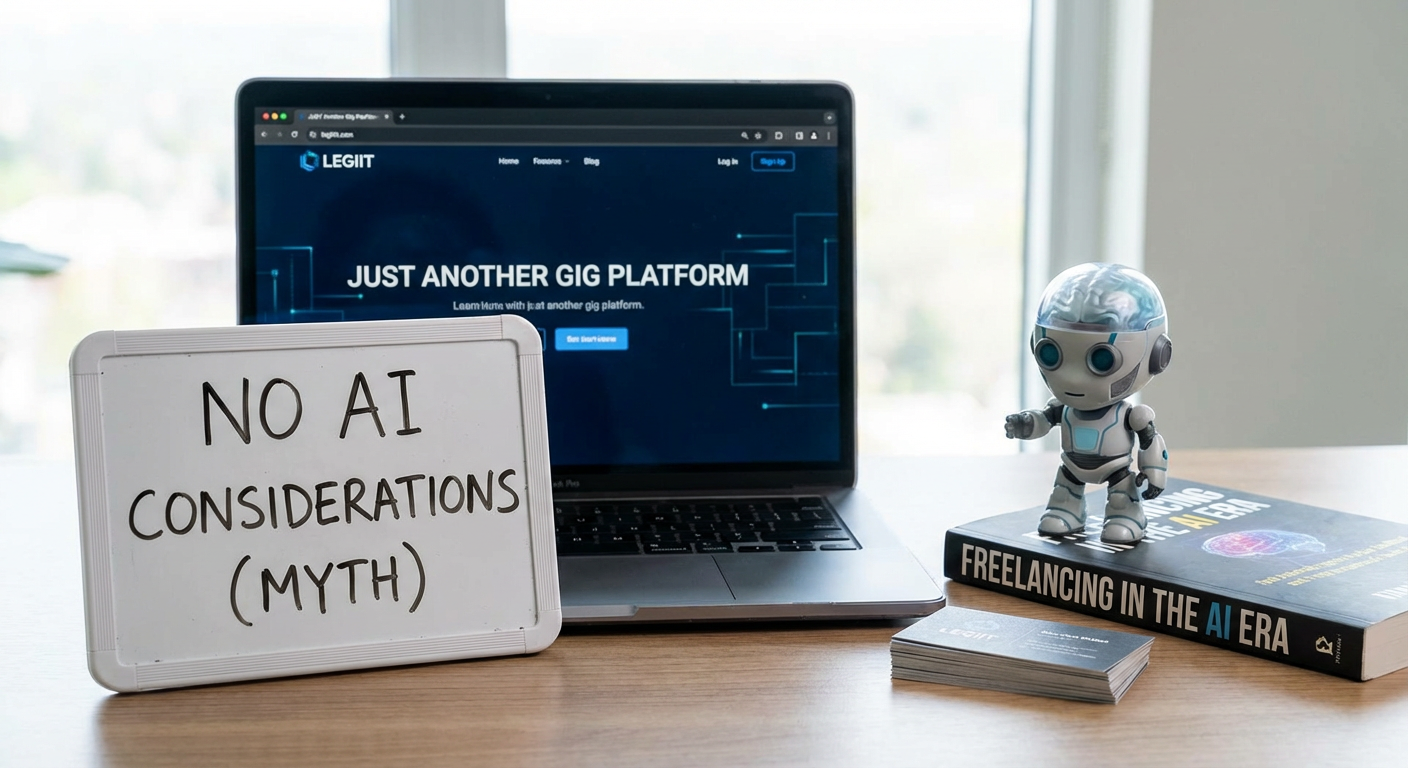
Many freelancers overlook Legiit because they assume it’s just another marketplace without any thought given to how AI affects modern freelancing. In reality, Legiit has built its platform with a clear understanding that freelancers need to differentiate themselves through specialized skills and personal expertise, not compete on commodity tasks that AI can easily replicate. The platform emphasizes service packages that showcase unique human abilities like strategic thinking, creative problem solving, and personalized client communication. This makes it a smart choice for freelancers who want to position themselves in areas where AI serves as a tool rather than a replacement. The structure naturally encourages you to build offers that combine your expertise with AI efficiency rather than competing against automation.
- AI Tools Are Either Perfect or Useless
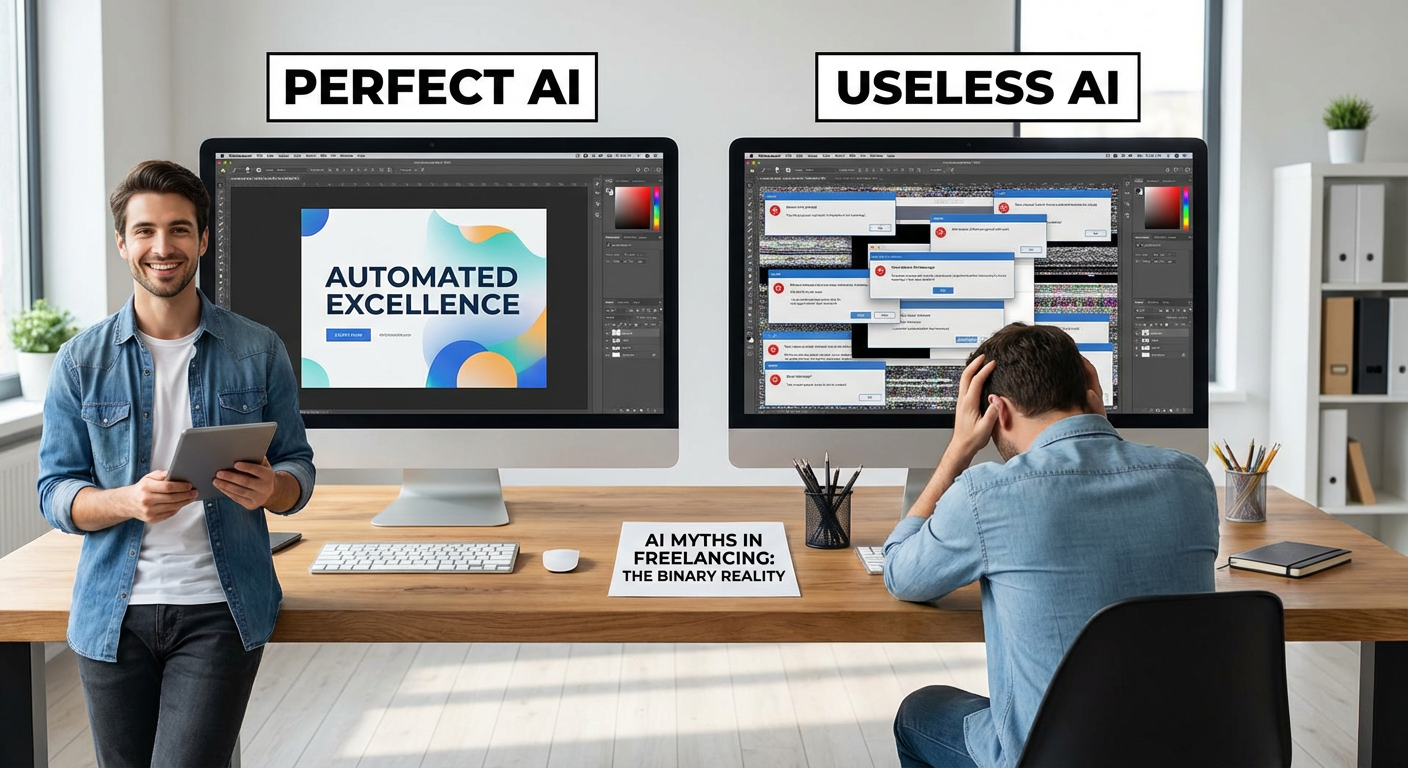
One hidden myth suggests that AI outputs are binary. People assume that if an AI tool produces something with errors, it’s worthless, and if it works well once, it will always be flawless. The truth sits in a much messier middle ground. AI tools produce variable results depending on how you prompt them, what data they’re trained on, and how you apply their outputs. A single disappointing result doesn’t mean the tool is broken, and a great output doesn’t guarantee consistency. Freelancers who understand this nuance use AI as a collaborative partner, checking and refining outputs rather than treating them as either magic wands or complete failures.
- Clients Can’t Tell When You Use AI
This quiet assumption gets many freelancers into trouble. Some believe that AI-generated content or designs are indistinguishable from human work, so clients will never know the difference. But experienced clients often can tell, especially when the work lacks the specific context, brand voice, or strategic thinking that comes from true understanding. The bigger issue is that many clients don’t care if you use AI, they care about the quality and appropriateness of the final deliverable. Hiding your process creates unnecessary anxiety and prevents you from having honest conversations about how you work efficiently while maintaining high standards.
- You Should Master Every AI Tool Available
Freelancers often feel pressure to learn every new AI tool that launches, fearing they’ll fall behind if they don’t. This myth burns people out faster than almost anything else. The reality is that most AI tools overlap significantly in function, and trying to master all of them means mastering none. Instead, pick two or three tools that genuinely improve your specific workflow and learn them deeply. Understanding how to prompt one language model well transfers to others. Knowing one design AI gives you the foundation to adapt to similar tools quickly. Depth beats breadth when it comes to practical AI literacy.
- AI Makes Experience Less Valuable
A subtle but damaging myth suggests that because AI can generate content or code quickly, years of experience matter less than they used to. This completely misunderstands what experience provides. Seasoned freelancers bring judgment, context, and pattern recognition that AI cannot replicate. They know which approaches work in specific situations, can spot problems before they escalate, and understand the human and business factors that determine project success. AI might speed up execution, but it doesn’t replace the wisdom that tells you what to execute in the first place. If anything, experience becomes more valuable because it determines how effectively you can direct and refine AI outputs.
- Disclosing AI Use Will Cost You Clients
Many freelancers operate under the hidden fear that if they’re transparent about using AI tools, clients will think they’re lazy or unskilled. This myth keeps people silent about their actual processes. In practice, most professional clients appreciate transparency and efficiency. When you explain that you use AI to handle repetitive tasks so you can focus more energy on strategy and customization, clients usually see this as smart resource management. The key is framing AI as part of your toolkit rather than your replacement. Clients hire you for your judgment and expertise, and being honest about your methods builds trust rather than destroying it.
- AI-Generated Work Doesn’t Need Fact-Checking
This dangerous myth affects freelancers who assume that because AI sounds confident, it must be accurate. Language models generate text that reads smoothly and authoritatively, even when the information is completely wrong. They can cite studies that don’t exist, misstate historical facts, and confidently present outdated information as current. Freelancers who skip verification steps because the AI output looks polished end up delivering flawed work to clients. The hidden cost of this myth isn’t just occasional errors, it’s the erosion of your professional reputation when clients discover inaccuracies that you should have caught.
- You Need to Hide Your Workflow to Stay Competitive
Some freelancers believe that if they share how they integrate AI into their work, competitors will copy their methods and undercut them. This myth keeps people isolated and prevents the community learning that makes everyone better. In reality, your specific combination of skills, client relationships, communication style, and quality standards cannot be easily replicated, even if someone knows which tools you use. Sharing your workflow often leads to referrals, collaborations, and reputation building that more than compensates for any theoretical competitive risk. The freelancers who openly discuss their methods tend to be seen as leaders in their fields rather than as vulnerable targets.
- AI Tools Understand Your Industry Automatically
Many people assume that because AI models are trained on vast amounts of data, they naturally understand the nuances of specific industries. This myth leads to disappointment when AI generates generic content that misses crucial industry context. A model might know general marketing principles but not understand the compliance requirements in healthcare marketing or the cultural sensitivities in international education. Freelancers need to provide this context through detailed prompts, examples, and refinement. The myth that AI comes pre-loaded with your industry expertise wastes time and produces mediocre results until you correct it.
- Cheaper AI Tools Are Just as Good as Premium Ones
This hidden assumption causes frustration when freelancers try free or low-cost AI alternatives and get disappointing results compared to what they’ve heard others achieve. While it’s true that some free tools are excellent, there are often meaningful differences in capability, output quality, and features between free and paid versions. The myth isn’t that you always need to pay more, but rather that all AI tools within a category are basically interchangeable. Sometimes the premium version genuinely offers better results that justify the cost for professional use. Other times the free version is perfectly adequate. The key is testing realistically rather than assuming price doesn’t correlate with quality.
- AI Creativity Is Random and Unpredictable
Some freelancers believe that AI outputs are essentially random, so there’s no point in learning to prompt better or refine your requests. This myth treats AI like a lottery rather than a tool you can learn to use skillfully. In reality, AI responses follow patterns based on how you structure prompts, what context you provide, and how you frame your requests. People who study what produces good results can reliably generate better outputs than those who don’t. The appearance of unpredictability usually comes from not understanding how small changes in input create large changes in output. Once you recognize these patterns, AI becomes far more controllable and useful.
- You Can’t Build a Personal Brand While Using AI
A quietly pervasive myth suggests that using AI tools somehow dilutes your personal brand or makes your work less authentic. This assumes that personal brand comes from doing everything manually rather than from your perspective, taste, and judgment. In reality, your brand is built on the ideas you choose to pursue, how you solve problems, the quality standards you maintain, and how you interact with clients and audiences. AI might help you produce more content or execute tasks faster, but your voice and values still shape everything you create. Many successful freelancers with strong personal brands use AI extensively, they just ensure that their perspective guides the process rather than accepting generic outputs.
- AI Will Learn Your Preferences Automatically Over Time
Some freelancers expect AI tools to remember their preferences and automatically adapt to their style across sessions. While some tools do offer memory features, most operate without persistent memory of previous interactions. This myth leads to frustration when you have to re-explain your requirements in each new conversation or project. Understanding this limitation helps you develop better practices, like saving effective prompts, creating style guides to paste into conversations, and not expecting the AI to recall context from days or weeks ago. The tools are powerful within a session but often start fresh each time, so you need to build systems that account for this reality.
- AI-Assisted Work Takes Less Skill
This hidden myth devalues the expertise required to use AI effectively. People assume that because AI handles execution, the person using it needs less skill or knowledge. In practice, getting good results from AI requires substantial skill in prompting, editing, quality control, and knowing what to ask for in the first place. A skilled professional using AI produces dramatically better results than a novice using the same tool. The skill shifts from pure execution to direction, refinement, and judgment, but it doesn’t disappear. Clients who understand this recognize that AI-assisted work from an expert is more valuable than purely manual work from a beginner.
- You Should Use AI for Every Task to Stay Efficient
Some freelancers fall into the trap of thinking that because AI can handle many tasks, they should use it for everything to maximize efficiency. This myth ignores the reality that some tasks are actually faster, better, or more satisfying to do manually. Writing a quick email to a long-time client, sketching an initial concept, or making a simple edit often takes longer when you factor in opening a tool, crafting a prompt, and reviewing the output. The overhead of using AI for trivial tasks can exceed any benefit. Skilled freelancers develop judgment about when AI genuinely helps versus when it just adds unnecessary steps to simple processes.
- AI Eliminates the Need for Human Editors and Reviewers
A dangerous hidden myth suggests that AI outputs are clean enough to skip traditional editing and review processes. This assumption ignores the subtle errors, tone problems, and logical inconsistencies that AI regularly produces. Language models can write grammatically correct sentences that don’t quite make sense together, or that subtly contradict earlier points, or that miss the mark on tone for a specific audience. Visual AI can create images with weird artifacts or anatomical impossibilities. Skipping human review because the AI output looks good at first glance leads to embarrassing mistakes and client dissatisfaction. The myth that AI eliminates editing actually makes editing more important, not less.
- All AI Outputs Are Legally Safe to Use
Many freelancers don’t realize that using AI-generated content can create legal complications around copyright, licensing, and intellectual property. This myth treats AI outputs as inherently safe and unencumbered by legal concerns. The reality is more complex and still being decided in courts. Some AI-generated images might resemble copyrighted works, some text might inadvertently plagiarize, and the legal status of AI outputs varies by jurisdiction and use case. Freelancers need to understand the terms of service for the tools they use, consider the legal implications for their clients, and stay informed about how regulations are developing. Ignorance of these issues doesn’t protect you when problems arise.
- AI Makes Research Obsolete
Some freelancers believe that because AI can answer questions and provide information, traditional research methods are no longer necessary. This myth ignores the limitations of AI knowledge, which is typically trained on data with a cutoff date and may not include specialized or recent information. AI also cannot access paywalled sources, proprietary databases, or conduct original interviews. For many projects, AI serves as a useful starting point that must be supplemented with real research, source verification, and current information gathering. Treating AI as a research replacement rather than a research assistant leads to outdated or incomplete work.
- You’re Either Pro-AI or Anti-AI
This binary myth creates unnecessary division and prevents nuanced thinking about AI’s role in freelancing. People assume they must either embrace AI completely and use it for everything, or reject it entirely to maintain authenticity. This false choice ignores the practical middle ground where most successful freelancers actually operate. You can appreciate AI’s usefulness for certain tasks while recognizing its limitations and choosing not to use it for others. You can support the development of helpful tools while criticizing problematic applications. The myth that you must pick a side prevents you from developing a thoughtful, personalized approach that fits your specific work and values.
- AI Success Stories Apply to Everyone Equally
When freelancers hear stories about someone who tripled their output or income using AI, they often assume those results are universally achievable. This myth ignores how much results depend on your specific field, skill level, client base, and type of work. A copywriter might see dramatic efficiency gains from AI, while a specialized consultant might find minimal applications. Someone with strong foundational skills might use AI to scale quickly, while someone still learning might produce more volume without better quality. The hidden danger is comparing yourself to cherry-picked success stories without accounting for the many differences in context. Your AI journey will be unique to your situation, not a copy of someone else’s results.
These lesser-known myths about AI in freelancing don’t get much attention, but they shape how thousands of freelancers approach their work every day. Unlike the obvious myths that everyone discusses, these hidden misconceptions quietly influence decisions about pricing, client communication, workflow design, and professional development. Recognizing them gives you a clearer picture of how AI actually fits into freelance work, free from the hype and the fear that dominate most conversations. The freelancers who succeed with AI aren’t the ones who blindly adopt every tool or stubbornly resist all change. They’re the ones who think critically about what actually helps their specific situation and build their approach from there.