14 Lesser-Known Sites That Blend AI Services With Human QA
Most people know about the big names when it comes to combining artificial intelligence with human quality assurance. But some of the best solutions fly under the radar, offering excellent service without the hype. This list is for anyone who wants to find reliable platforms that use AI to speed things up while keeping humans in the loop to catch what algorithms miss. You’ll discover services that deliver quality work without the premium price tags or long wait times of more famous competitors.
- Legiit

Legiit connects you with freelancers who use AI tools to work faster, then apply their expertise to polish the results. The platform focuses on digital marketing services like content writing, SEO, and design, where speed matters but quality can’t slip. What makes it stand out is the community of vetted professionals who understand how to use AI as a tool rather than a replacement for judgment.
Many freelancers on Legiit openly share their workflows, showing how they combine automation with manual review. This transparency helps you understand exactly what you’re paying for. The pricing tends to be reasonable because freelancers can take on more projects when AI handles the repetitive parts.
- Scribie
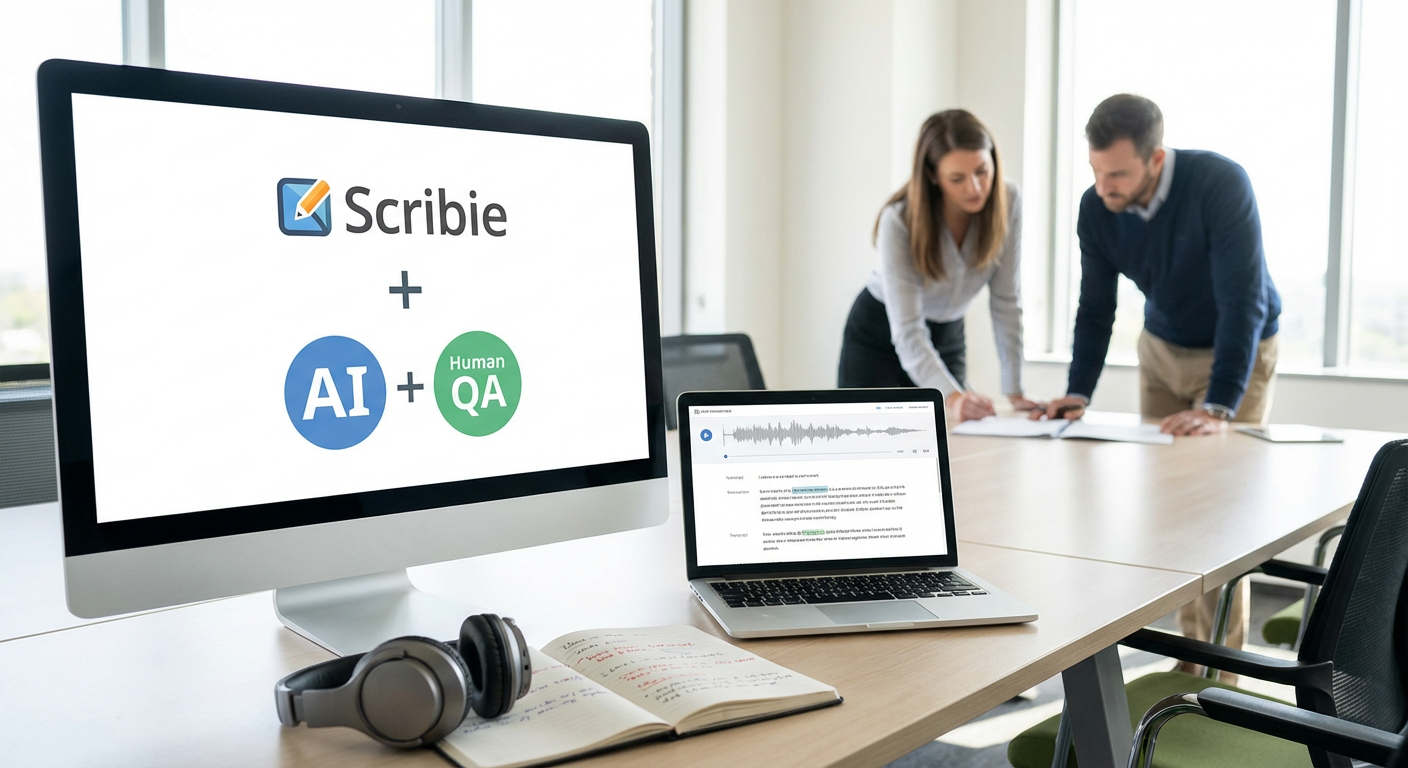
Scribie handles audio and video transcription by running files through speech recognition software, then sending them to human transcribers for correction. The AI does the heavy lifting on clear audio, while people fix errors and handle tricky sections with accents or technical terms. The result is accuracy rates that rival pure human transcription at a fraction of the cost.
The turnaround time sits comfortably in the middle ground. You won’t wait as long as you would for entirely manual transcription, but you get better quality than raw AI output. They also offer different accuracy tiers, so you can choose how much human review you need based on your budget.
- Gengo
Gengo specializes in translation services that start with machine translation and get refined by bilingual humans. This approach works well for large volumes of content where you need consistency but can’t afford the time or money for purely human translation. The platform has translators who specialize in specific industries, so your technical documentation or marketing copy gets reviewed by someone who understands the context.
The pricing structure is straightforward, with different levels based on how much human involvement you want. Standard translations get a quick review, while pro-level work receives more thorough editing. The quality control process includes spot checks and customer feedback loops to keep translators accountable.
- Clickworker
Clickworker offers data services where AI sorts and categorizes information, then humans verify the results. Companies use this for training machine learning models, checking product data, or cleaning up databases. The platform handles everything from simple yes-or-no tasks to complex content moderation that requires cultural understanding.
What makes Clickworker practical is the flexible workforce. When you need something done quickly, they can scale up the human reviewers without sacrificing quality. The AI pre-filters obvious cases, so human workers can focus on edge cases and difficult decisions. This keeps costs reasonable while maintaining accuracy.
- Cognito
Cognito focuses on customer service and support ticket management by using AI to draft responses, then having human agents review and send them. The system learns from each interaction, getting better at suggesting appropriate responses over time. Agents can edit the AI suggestions or write from scratch when needed.
This approach lets support teams handle higher volumes without burning out. The AI catches routine questions and repetitive issues, freeing humans to deal with complex problems that need empathy or creative solutions. Companies report faster response times without the robotic feel that purely automated systems often have.
- Hivemind
Hivemind combines AI image recognition with human verification for visual content moderation and tagging. The platform works well for e-commerce sites that need product images categorized or social media platforms that need content screened. AI identifies potential issues or categories, then humans make the final call.
The human layer is especially important for context-dependent decisions. An image that’s perfectly fine in one setting might be inappropriate in another, and AI often misses these nuances. Hivemind’s reviewers understand cultural differences and platform-specific rules, ensuring that moderation decisions make sense for your audience.
- Proofy
Proofy uses AI to catch grammar and spelling errors in written content, then sends the text to human editors who check for tone, flow, and clarity. This two-step process works well for blog posts, marketing materials, and business documents where correctness matters but so does readability. The AI handles the mechanical stuff instantly, while editors focus on making your writing sound natural.
Editors on Proofy can also fact-check claims and verify that your content makes logical sense. This goes beyond what grammar checkers can do. The service offers different turnaround speeds, with express options for urgent projects and economy rates when you can wait a bit longer.
- DataLoop
DataLoop specializes in labeling data for machine learning projects by using AI to suggest labels, then having humans verify or correct them. This matters if you’re training computer vision models, natural language processors, or any AI that needs clean training data. The platform handles images, text, video, and audio.
The quality control system includes multiple reviewers for critical projects and consensus mechanisms to resolve disagreements. DataLoop also tracks annotator performance over time, so you know your data is being labeled consistently. The hybrid approach means you can process large datasets without the prohibitive costs of purely manual labeling.
- Wordy
Wordy provides copy editing and proofreading services where AI flags potential problems, then human editors make corrections and improvements. The platform works with writers, businesses, and students who need their text polished quickly. Editors receive documents with AI-highlighted issues, which speeds up their work without replacing their judgment.
Each editor specializes in certain types of content, from academic papers to web copy. This specialization means your work gets reviewed by someone familiar with the conventions and expectations of your field. Wordy guarantees turnaround times and offers free revisions if you’re not satisfied with the edits.
- Sentient.io
Sentient.io offers various AI services through an API marketplace, with human oversight available for critical applications. You can access speech recognition, image analysis, text processing, and other AI capabilities, then add human verification layers when accuracy is crucial. This flexibility lets you dial in the right balance of speed and precision for each task.
The platform includes monitoring tools that flag when AI confidence drops below certain thresholds, automatically routing those cases to human reviewers. This smart routing means you only pay for human intervention when it’s actually needed. The service appeals to developers who want AI capabilities without building everything from scratch or trusting algorithms blindly.
- Labelbox
Labelbox provides tools for creating training data, combining automated labeling with human review workflows. The platform is popular with companies building computer vision or natural language processing systems. AI suggests labels based on existing patterns, and humans verify or correct these suggestions through an intuitive interface.
What sets Labelbox apart is the collaboration features. Multiple team members can work on the same dataset, with quality metrics tracked for each contributor. The system identifies inconsistencies and areas where labelers disagree, helping you improve data quality over time. This matters when your AI’s performance depends directly on training data accuracy.
- Rev
Rev handles transcription, captioning, and subtitling by combining automated speech recognition with human editors. The AI generates a first draft quickly, then professional transcribers clean it up and format it properly. This process works well for podcasts, videos, meetings, and interviews where you need text versions fast but can’t tolerate too many errors.
Rev also offers foreign language subtitling with the same hybrid approach. Machine translation provides the starting point, then bilingual humans adapt the text for proper timing and cultural fit. The quality is noticeably better than pure AI output, and the turnaround is much faster than traditional human-only services.
- Appen
Appen recruits and manages human workers who improve AI systems through data annotation, testing, and feedback. Companies use Appen when they need their voice assistants understood by different accents, their image recognition to work across cultures, or their chatbots to handle real conversations. AI does the initial processing, and humans evaluate whether the results are actually useful.
The platform maintains a global workforce, so you can get feedback from the specific demographics your product serves. This human-in-the-loop approach helps companies avoid embarrassing AI failures and biases. Appen handles the logistics of recruiting, training, and quality control, so you can focus on improving your models based on the feedback.
- Scale AI
Scale AI provides data labeling and quality assurance for companies building AI products. The platform uses algorithms to handle straightforward cases and routes ambiguous or complex examples to human experts. This tiered approach keeps costs manageable while ensuring high accuracy on the data that matters most.
Scale has built specialized workflows for autonomous vehicles, robotics, and other applications where mistakes have serious consequences. Human reviewers include subject matter experts who understand industry-specific requirements. The combination of AI efficiency and human expertise makes it possible to create the massive, high-quality datasets that modern AI systems need.
These platforms prove that you don’t need to choose between AI speed and human quality. The smartest approach uses algorithms for what they do well and brings in people for what they do best. Many of these services cost less than you’d expect because the hybrid model is efficient. As you explore options, pay attention to how each platform handles quality control and what kind of human expertise they provide. The right choice depends on your specific needs, but these lesser-known sites deserve consideration alongside the big names everyone already knows about.