
10 Ways to Get Featured in ChatGPT and Perplexity Search Results: Compared and Reviewed
Getting your content featured in AI search engines like ChatGPT and Perplexity has become a priority for many businesses and creators. But not all strategies work equally well, and each approach comes with its own set of trade-offs. This list compares ten different methods you can use to increase your visibility in these platforms. We’ll look at the pros and cons of each approach so you can decide which strategies make the most sense for your goals, budget, and timeline.
- Using Legiit’s AI Content and SEO Services

Legiit is a freelance marketplace that connects you with specialists who understand how to optimize content for AI search engines. The platform offers services ranging from content writing to technical SEO, all at competitive rates. The main advantage here is access to vetted professionals who already know what works for ChatGPT and Perplexity indexing. You can browse portfolios, read reviews, and choose someone whose experience matches your needs.
The downside is that quality varies by provider, so you’ll need to do some homework before hiring. However, the trade-off is favorable if you lack the time or expertise to handle optimization yourself. Compared to hiring a full-time employee or expensive agency, Legiit offers flexibility and cost control. You pay for what you need, when you need it, without long-term contracts or overhead.
- Building a Wikipedia Page Versus Creating a Knowledge Base
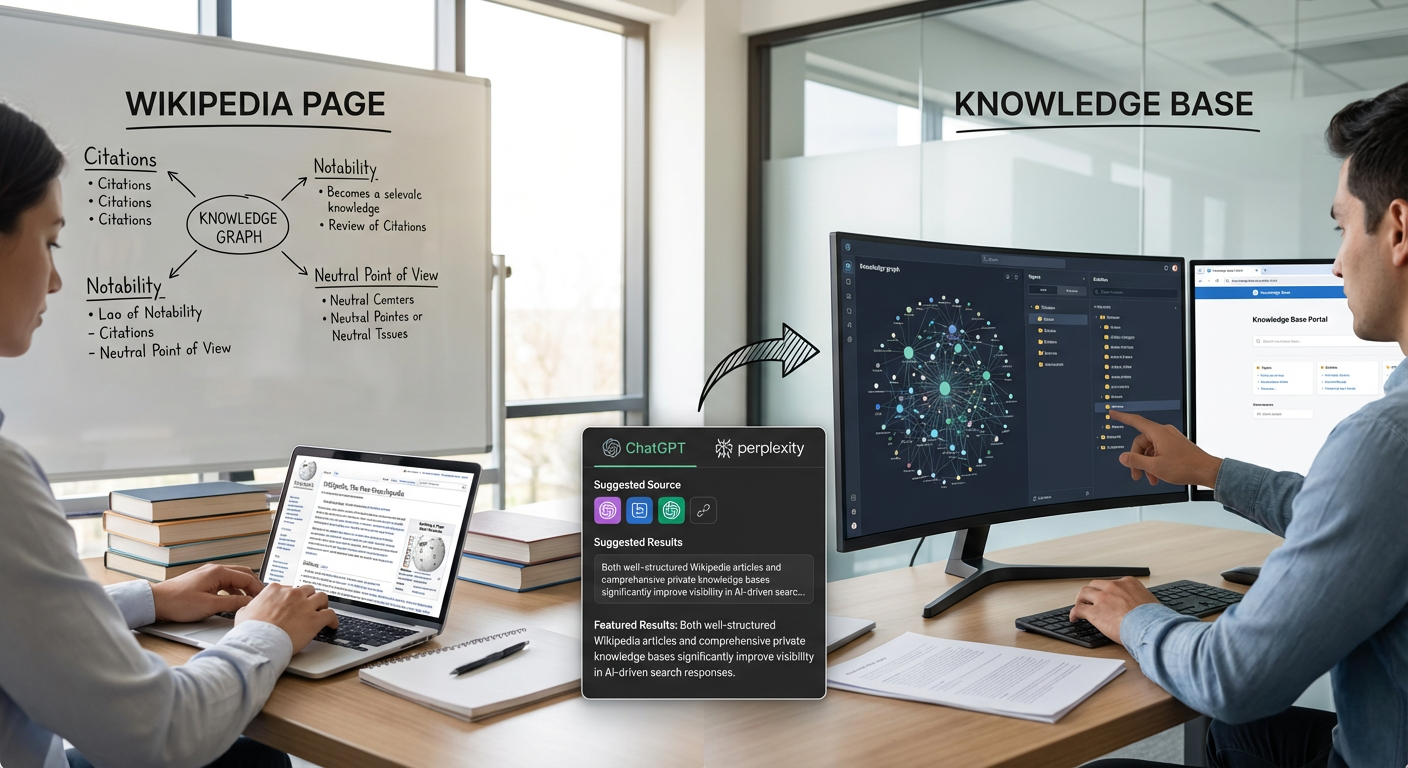
Wikipedia pages carry enormous weight with AI systems because they’re considered authoritative sources. If you can get a legitimate Wikipedia article about your brand or topic, ChatGPT and Perplexity are far more likely to reference you. The challenge is that Wikipedia has strict notability requirements and a volunteer editing community that scrutinizes every addition. You can’t just create a promotional page. You need genuine third-party coverage and verifiable achievements.
On the other hand, building your own knowledge base or FAQ section gives you complete control over the content. You can structure information exactly how you want and update it whenever needed. The trade-off is that self-published content carries less authority in the eyes of AI systems. Your knowledge base might help with direct queries about your products, but it won’t have the same citation power as Wikipedia. If you qualify for Wikipedia, pursue it. If not, a well-structured knowledge base is still worth the effort as a secondary strategy.
- Earned Media Coverage Compared to Paid Press Releases
Earned media, where journalists and publications write about you organically, is the gold standard for AI visibility. When reputable news sites and industry publications cite your work, AI systems treat those mentions as high-quality signals. The content is typically more detailed and contextual than promotional material. The drawback is that earned media is hard to control and takes time to cultivate. You need newsworthy stories, relationships with journalists, and sometimes a bit of luck.
Paid press releases offer a faster route to getting your name in distribution networks that AI systems crawl. Services like PR Newswire and Business Wire push your announcements to hundreds of outlets simultaneously. The benefit is speed and guaranteed placement. The negative is that AI systems are increasingly sophisticated at recognizing promotional content, and press releases carry less weight than editorial coverage. Press releases work best when combined with other strategies, not as a standalone solution. If you have budget constraints, focus your resources on creating genuinely newsworthy content that might earn organic coverage instead.
- Long-Form Content Versus Short, Frequent Updates
Long-form articles of 2,000 words or more tend to perform well with AI search engines because they provide comprehensive answers to complex questions. ChatGPT and Perplexity prefer pulling from sources that thoroughly cover a topic rather than surface-level posts. Deep content demonstrates expertise and gives AI systems more context to work with. The trade-off is that long-form content takes significant time and effort to produce. You might only publish a few pieces per month.
Short, frequent updates keep your site active and allow you to cover more topics quickly. You can respond to trends, answer specific questions, and maintain a steady publishing rhythm. The downside is that brief posts may not provide enough substance for AI systems to consider them authoritative on any single topic. The best approach depends on your resources. If you have a small team, prioritize a few exceptional long-form pieces over dozens of thin posts. If you have bandwidth, combine both approaches by creating pillar content supported by shorter related articles.
- Schema Markup Implementation Compared to Natural Language Optimization
Schema markup is structured data that helps search engines and AI systems understand your content more precisely. By tagging information like articles, products, events, and FAQs with specific code, you make it easier for Perplexity and ChatGPT to extract and cite your information correctly. The advantage is technical precision. Your content becomes machine-readable in a way that reduces ambiguity. The challenge is that implementing schema requires technical knowledge or developer assistance. It’s an invisible improvement that users won’t see directly.
Natural language optimization focuses on writing content that clearly answers questions in plain English. This approach assumes that AI systems are smart enough to understand well-written content without special markup. The benefit is that anyone can do it without technical skills, and it makes your content more readable for human visitors too. The limitation is that you’re relying entirely on AI interpretation without giving explicit signals. The smart move is to do both when possible, but if you must choose, start with natural language optimization since it benefits both human and AI readers. Add schema markup later as a refinement.
- Original Research and Data Versus Curated Information
Publishing original research, surveys, and proprietary data makes you a primary source that AI systems will reference when discussing your topic area. When you’re the origin of information, ChatGPT and Perplexity have to cite you if they want to use that data. This gives you enormous visibility and authority. The downside is that original research requires significant resources. You need methodology, data collection, analysis, and presentation skills.
Curating and synthesizing existing information is far easier and still valuable. You can compile insights from multiple sources, add your own analysis, and create useful guides that help people understand complex topics. AI systems do cite well-organized compilations, though not as frequently as original sources. The trade-off is between authority and effort. If you have the resources, original research pays long-term dividends. If you’re just starting or have limited bandwidth, thoughtful curation can still get you noticed while you build toward bigger projects.
- Building Domain Authority Through Backlinks Versus Social Proof
Traditional SEO wisdom says that backlinks from authoritative sites boost your domain authority and make search engines trust your content more. This principle still applies to AI search engines, which consider the link profile of sources when deciding what to cite. Getting links from respected publications, academic institutions, and established industry sites strengthens your position. The challenge is that building a strong backlink profile takes time and relationship building. You can’t rush it.
Social proof through engagement metrics, shares, and community discussion provides an alternative signal of value. When your content generates conversation on platforms like Reddit, Twitter, and professional forums, it indicates relevance and usefulness. Some AI systems monitor these signals as indicators of what people actually find helpful. The limitation is that social proof is more volatile and harder to sustain than backlinks. A viral post might spike mentions temporarily without lasting impact. The most effective strategy combines both approaches. Pursue quality backlinks for stable, long-term authority while maintaining an active presence in relevant communities for timely visibility.
- Optimizing for Specific Queries Versus Broad Topic Coverage
Focusing on specific, well-defined queries allows you to dominate narrow niches. If you become the go-to source for a particular question or topic area, AI systems will consistently cite you when those queries come up. You can research the exact questions people ask, then create content that directly addresses them. This targeted approach can yield quick wins. The drawback is that you might limit your overall reach by focusing too narrowly. You become known for one thing, which helps in that area but doesn’t expand your visibility broadly.
Broad topic coverage positions you as a general authority in your field. By publishing across many related subjects, you increase the chances that AI systems will encounter and cite your work for various queries. You build a comprehensive resource that serves multiple needs. The trade-off is that you might not rank as the top source for any single query if competitors have more focused content. The right choice depends on your goals. If you’re establishing a new presence, start with specific queries where you can realistically compete. As you build authority, expand into broader coverage.
- Video and Multimedia Content Compared to Text-Only Articles
Video content is increasingly important as AI systems become better at processing multimedia. YouTube videos with transcripts give you multiple ways to be cited. The transcript provides text for AI systems to analyze, while the video itself offers engaging content for users. Podcasts with show notes work similarly. The advantage is that you reach different audience preferences and give AI systems more formats to work with. The disadvantage is production complexity. Video and audio require equipment, editing skills, and more time than writing.
Text-only articles remain the easiest format for AI systems to process and cite. They’re straightforward to create, edit, and update. You don’t need special equipment or technical skills beyond writing. The limitation is that you’re competing in the most crowded format where everyone publishes. The practical approach for most creators is to start with text because it’s accessible and effective. Add multimedia as your resources allow, starting with simple formats like recorded presentations or audio versions of your articles. This gives you the benefits of multiple formats without overwhelming your production capacity.
- Fresh Content Updates Versus Evergreen Archives
Regularly updating your content with current information signals to AI systems that your site is active and maintained. When ChatGPT and Perplexity see recent publication dates and updated timestamps, they’re more likely to consider your information current and relevant. This approach works well for news, trends, and topics that change frequently. The downside is that it requires ongoing effort. You can’t just publish and forget. You need systems for monitoring when updates are needed and resources to make them.
Evergreen content that remains relevant regardless of when it’s published requires less maintenance. Well-written guides, fundamental concepts, and timeless advice continue providing value for years. AI systems cite evergreen content when the information remains accurate, and you benefit from cumulative authority as the content ages and accumulates backlinks. The limitation is that truly evergreen topics are limited, and even they eventually need refreshing. The balanced approach is to build a foundation of evergreen content that establishes your authority, then supplement it with timely updates and news coverage that keeps your site active. This combination gives you both stability and relevance.
Each method for getting featured in ChatGPT and Perplexity comes with distinct advantages and limitations. The approaches that require more resources, like original research or earned media coverage, typically deliver stronger results but aren’t accessible to everyone. Meanwhile, strategies like natural language optimization and evergreen content creation are available to anyone willing to put in the work. The key is understanding what you can realistically implement given your skills, budget, and timeline. Most successful visibility strategies combine multiple approaches rather than relying on just one. Start with the methods that match your current capabilities, then expand as you gain experience and resources.