10 Future-Ready Tools You Must Have in Your Freelancing Business, Categorized by Application
The freelancing world keeps changing, and the tools that work today might not be the ones that carry you forward tomorrow. If you want to build a business that lasts, you need to think strategically about the platforms and software you rely on. This list focuses on tools that are built to grow with you, adapt to market shifts, and keep you competitive no matter what happens next. Whether you handle client work, manage finances, or market your services, these ten tools are designed to stand the test of time. Let’s look at what belongs in your toolkit if you’re serious about staying relevant and prepared for whatever comes next.
- Legiit: Service Marketplace with Long-Term Visibility
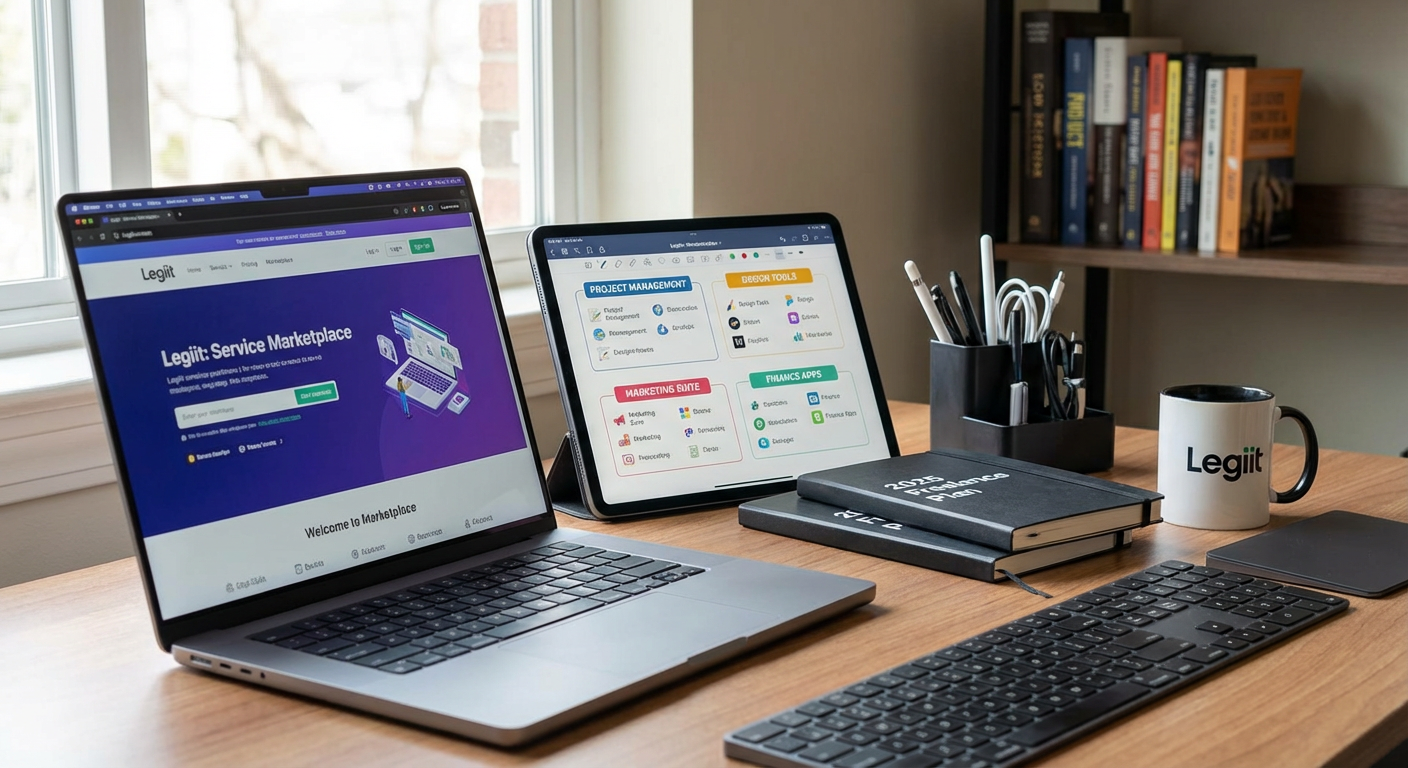
Legiit is a freelance marketplace that gives you more control over your business compared to traditional gig platforms. Instead of racing to the bottom on price or competing in oversaturated categories, Legiit lets you build a storefront with recurring services, upsells, and long-term client relationships. The platform is built for serious freelancers who want to scale without being buried in algorithm changes or bidding wars.
What makes Legiit a smart choice for the long haul is its focus on digital marketing services and its community of repeat buyers. You’re not just chasing one-off gigs. You can create subscription-based offerings, which means predictable income and less time hunting for the next project. The platform also supports affiliates, so you can earn passive income by referring other freelancers or buyers. If you’re thinking about sustainability and growth, Legiit is worth adding to your core toolkit.
- Notion: All-in-One Workspace That Scales with You
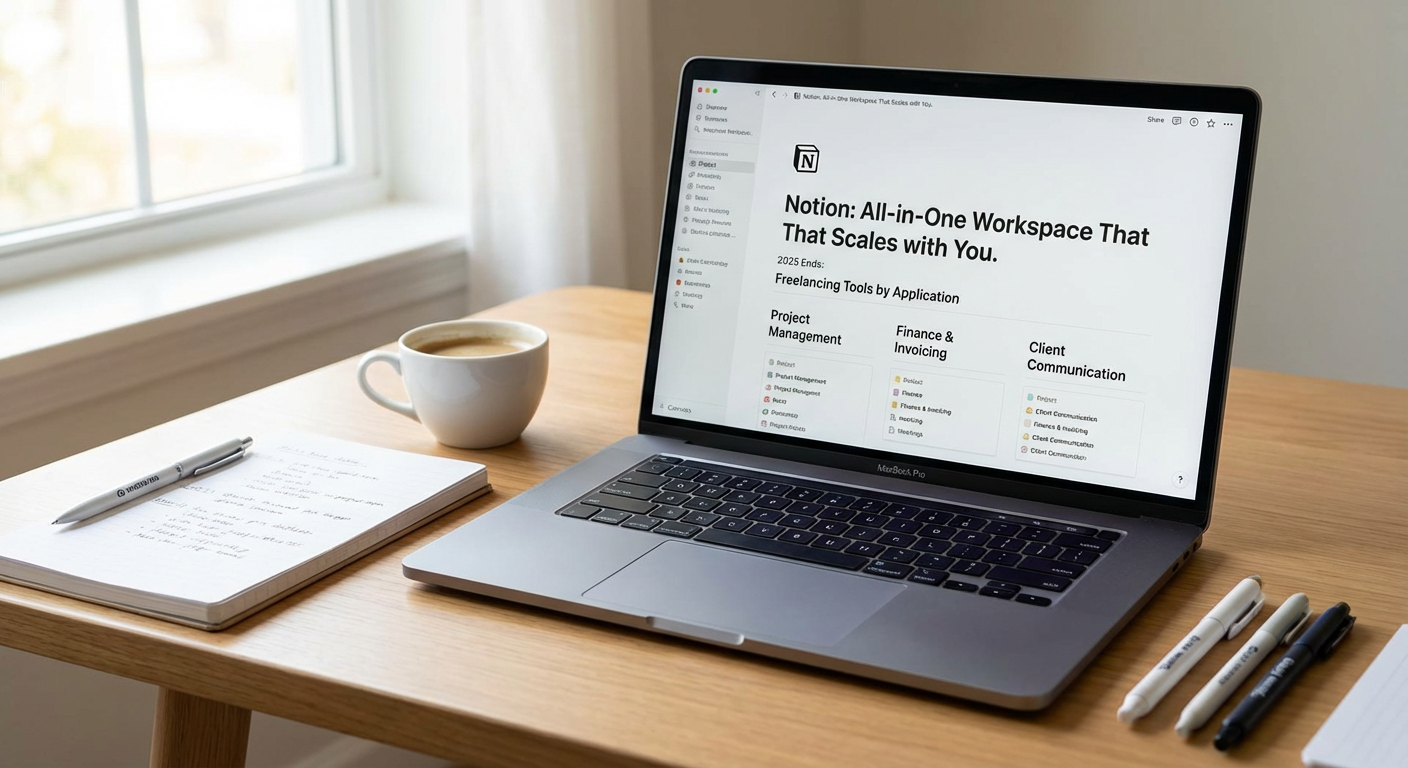
Notion has become a favorite among freelancers who need a flexible workspace that can handle everything from project management to client documentation. What sets Notion apart is its adaptability. You can build databases, create templates, track tasks, store notes, and even manage a content calendar, all in one place. As your business grows, Notion grows with you without forcing you into rigid structures.
The platform is constantly improving, with regular updates that add new features and integrations. It syncs across devices, supports collaboration, and works offline. If you’re tired of juggling five different apps to stay organized, Notion consolidates your workflow into a single, customizable system. It’s a smart investment for freelancers who value control and want a tool that won’t box them in as their needs change.
- Stripe: Payment Processing Built for Growth
Stripe is more than just a payment processor. It’s a financial infrastructure platform that supports everything from one-time invoices to subscription billing, international transactions, and even complex revenue models. If you’re planning to scale your freelance business or add passive income streams, Stripe gives you the flexibility to do that without switching providers down the line.
What makes Stripe future-ready is its developer-friendly design and constant innovation. The platform supports multiple currencies, handles tax calculations, and integrates with almost every major business tool you might use. You can accept payments on your website, through invoices, or via mobile, and everything is designed to be secure and compliant. Stripe isn’t going anywhere, and neither will your ability to get paid reliably as your business evolves.
- Loom: Async Video Communication That Saves Time
Loom lets you record quick video messages to explain ideas, give feedback, or walk clients through deliverables without scheduling yet another meeting. As remote work continues to dominate, async communication tools like Loom are becoming essential. They let you communicate clearly without the back-and-forth of email or the scheduling hassle of video calls.
The tool is simple to use. You hit record, capture your screen and face, and share a link. Clients can watch on their own time and reply with comments or their own video. This kind of flexibility is what modern freelancers need to work efficiently across time zones and busy schedules. Loom also stores your videos in the cloud, so you can reuse explainer content or onboarding walkthroughs. It’s a small tool that delivers big time savings, and it’s only getting more popular as the way we work continues to shift.
- Airtable: Database Power Without the Learning Curve
Airtable combines the simplicity of a spreadsheet with the power of a database, making it perfect for freelancers who need to track clients, projects, invoices, or content pipelines. Unlike traditional spreadsheets, Airtable lets you link records, create custom views, and automate repetitive tasks. It’s flexible enough to handle almost any workflow you can think of, and it scales as your business gets more complex.
What makes Airtable a smart long-term choice is its active development and strong integration ecosystem. You can connect it to tools like Slack, Gmail, and Zapier, which means your data flows smoothly between systems. The platform also offers templates for common freelance needs, so you don’t have to build everything from scratch. If you want a tool that can handle today’s simple task list and tomorrow’s multi-client project pipeline, Airtable is a solid pick.
- Descript: Next-Generation Audio and Video Editing
Descript is changing the way freelancers edit audio and video by letting you edit media files like you would edit a text document. You can cut, rearrange, and polish your content by simply deleting words from a transcript. It’s fast, intuitive, and perfect for podcasters, video creators, or anyone who produces media content for clients.
What sets Descript apart is its use of AI to handle tedious tasks like removing filler words, improving audio quality, or even generating voice clones for corrections. The tool is continuously adding new features, and it’s built for a world where video and audio content are only going to become more important. If you’re getting into content creation or already producing media for clients, Descript is a tool that will keep you ahead of the curve without requiring a steep learning process.
- Gusto: Payroll and HR for Freelancers Who Hire
Gusto is a payroll and benefits platform that makes sense for freelancers who are starting to hire contractors or employees. As your business grows, managing payments, tax forms, and compliance becomes more complicated. Gusto handles all of that automatically, so you can focus on the work instead of paperwork.
The platform supports full-time employees, part-time workers, and contractors, and it handles federal and state tax filings. It also offers benefits administration, time tracking, and onboarding tools. If you’re thinking about building a team or bringing on help, Gusto is built to scale with you. It’s designed for small businesses, which means the interface is simple and the pricing is reasonable. This is the kind of tool that saves you headaches as your freelance operation becomes more than a solo act.
- Canva Pro: Design Tool That Keeps Getting Better
Canva Pro is a design platform that freelancers across industries rely on for everything from social media graphics to presentations and marketing materials. What makes Canva a strong long-term choice is its constant expansion. The platform regularly adds new templates, features, and integrations, and it’s moving into areas like video editing and website building.
With Canva Pro, you get access to a massive library of stock photos, fonts, and templates, plus tools like background remover and brand kit management. You don’t need to be a designer to create professional-looking content, and you can produce work quickly without expensive software. As visual content becomes more important for freelancers in every field, having a reliable design tool that evolves with the market is a smart move. Canva isn’t going anywhere, and neither is the need for good design.
- Calendly: Scheduling That Respects Everyone’s Time
Calendly automates the scheduling process so you never have to play email ping-pong to find a meeting time. You set your availability, share a link, and clients or collaborators book a time that works for both of you. It’s simple, but it saves hours every month and makes you look organized and professional.
The tool integrates with Google Calendar, Outlook, Zoom, and other platforms, so everything stays in sync. You can set buffer times between meetings, create different event types for different services, and even collect payment or intake forms before a call. As your client base grows, Calendly becomes even more valuable because it scales without adding complexity. It’s one of those tools that just works, and it’s built to keep working no matter how your business changes.
- Zapier: Automation That Connects Your Entire Stack
Zapier is an automation platform that connects the apps you already use and makes them work together without code. You can set up workflows, called Zaps, that trigger actions across different tools. For example, when a client fills out a form, Zapier can add them to your CRM, send a welcome email, and create a task in your project manager, all automatically.
What makes Zapier essential for the long term is its massive library of supported apps and its focus on helping non-technical users automate their work. As you add new tools to your business, Zapier can usually connect them, which means your workflows stay efficient without needing a developer. Automation is the key to scaling without burning out, and Zapier is the easiest way to get started. It’s a tool that pays for itself in saved time, and it becomes more valuable the more you use it.
- QuickBooks Self-Employed: Financial Management That Grows with You
QuickBooks Self-Employed is designed specifically for freelancers and solo business owners who need to track income, expenses, and taxes without hiring an accountant. The app connects to your bank accounts and automatically categorizes transactions, tracks mileage, and estimates quarterly taxes. When tax season arrives, you can export everything directly to TurboTax or hand it to a tax professional.
What makes QuickBooks a smart long-term choice is its reputation and reliability. Intuit has been building financial software for decades, and QuickBooks is constantly updated to stay compliant with tax laws and accounting standards. As your freelance income grows, you can upgrade to more advanced versions of QuickBooks without losing your data or starting over. Good financial management is the foundation of a sustainable business, and QuickBooks makes it manageable even if numbers aren’t your strong suit.
Building a freelance business that lasts means choosing tools that can adapt, scale, and stay relevant as the market changes. The ten tools on this list are all designed with longevity in mind. They’re built by companies that invest in their products, listen to users, and keep improving over time. By focusing on platforms that grow with you, you’re setting yourself up for less disruption, fewer migrations, and more time spent doing the work you actually get paid for. Take a look at your current toolkit and ask yourself which tools are helping you build for the future, not just getting by today. The right software choices now will make a big difference down the road.